
AI Influencers & Digital Twins:
Your Next Brand Ambassador Might Not Be Human, And That’s More Complicated Than It Sounds
Virtual influencers. AI-generated spokespeople. Digital twins of real celebrities. If you’ve been seeing these terms pop up everywhere and quietly wondering whether this is actually a thing you need to care about, the answer is yes, but with important caveats the hype machine tends to skip over.
Let’s talk about the data first. According to Adweek (2026), 77% of marketers plan to allocate a larger share of their advertising budgets to AI-generated creator content, up from 65% in 2023. Consumer trust in these virtual figures is climbing fast, with 76% of consumers saying they trust virtual influencers to inform product recommendations (Adweek, 2026). Those are not small numbers. They signal that a fundamental shift is already underway in how brands think about creator partnerships.
But here’s where it gets interesting, and honestly, a little messy. Despite those high trust numbers, only 9% of marketers plan to partner with virtual influencers in 2026, and just 2% plan to create their own AI avatar or digital clone of a creator (Digiday, 2026a). While consumers say they’re open to it, marketers are still tiptoeing. The backlash some brands have already faced explains why.
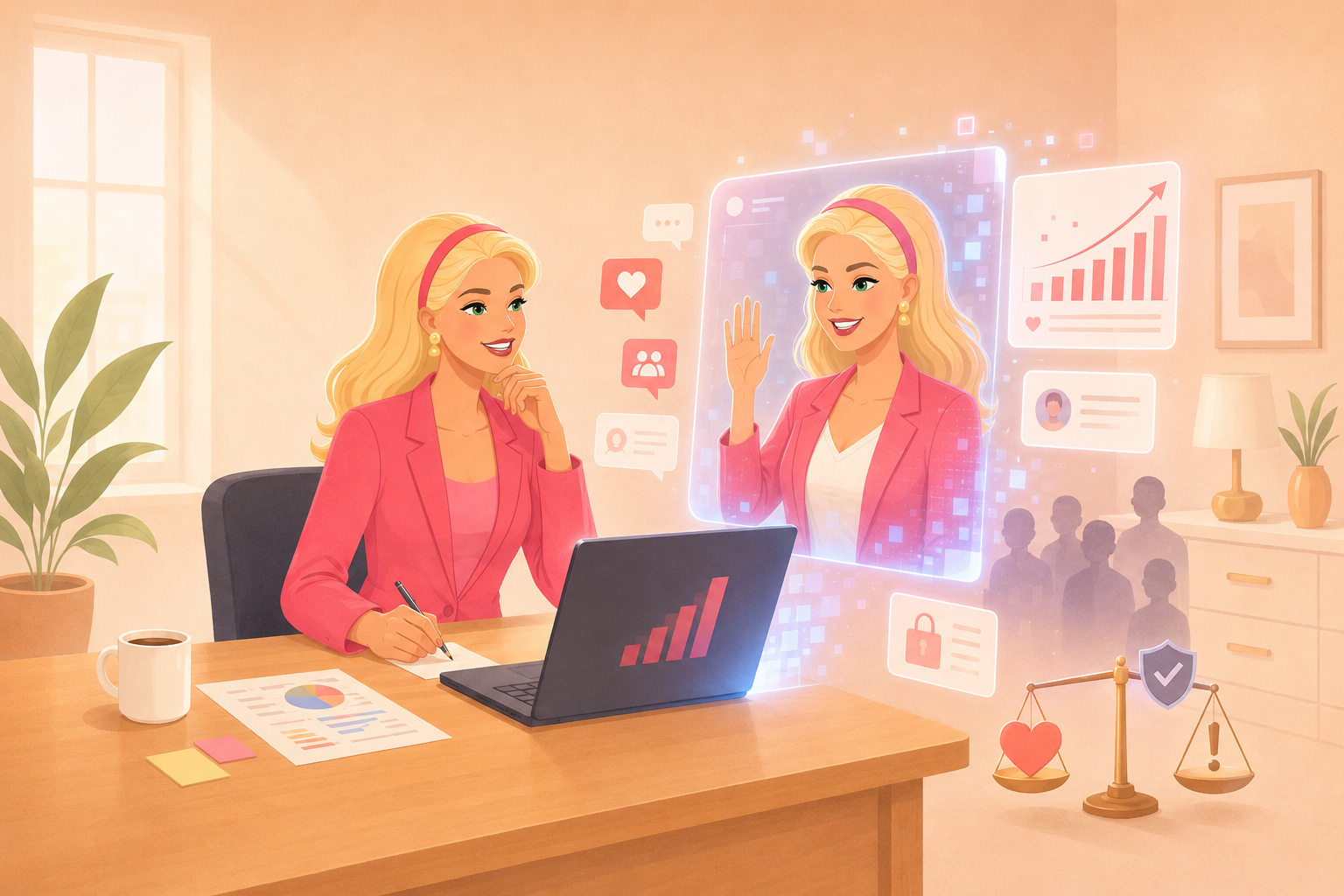
H&M and Puma both drew serious heat after removing the human element from their creative work. Influencer Morgan Riddle publicly called H&M’s use of AI twin models “shameful” (Digiday, 2026b). Meanwhile, Coca-Cola ran a FIFA World Cup campaign featuring an AI-generated version of José Mourinho debating himself, which landed very differently, as playful, on-brand, and clearly artificial in a way that felt intentional rather than deceptive (Digiday, 2026b). The difference between those two outcomes? Transparency and creative intent. Consumers can tell when a brand is using AI to cut corners versus using it to do something genuinely creative.
The automation conversation is heating up. Thirty-five percent of brands and 51% of industry leaders now “strongly agree” that influencer marketing should be fully automated with AI (Digiday, 2026a). And 28% of creators believe the next two to three years will be defined by AI-generated content (Digiday, 2026a). The creator economy is not ignoring this. It’s actively reckoning with it.
The Maroon Marketing take? This is one of those moments when the brands that move thoughtfully will win, and those that move carelessly will make headlines for the wrong reasons. Virtual influencers and digital twins aren’t inherently good or bad for your brand; they’re a tool, and like every tool, the outcome depends entirely on how you use it. If you’re considering dipping into AI-generated creator content, ask yourself two questions first: Is this adding something genuinely creative, or is it just cheaper? And would your audience feel misled if they found out? If the answer to the first is no or the second is yes, keep the humans.
Sources
- Adweek. (2026). 10 AI marketing trends for 2026: Agentic AI and search shifts. https://www.adweek.com/brand-marketing/10-ai-marketing-trends-for-2026-agentic-ai-and-search-shifts/
- Digiday. (2026a). In graphic detail: How AI is going to shape influencer marketing next year. https://digiday.com/marketing/in-graphic-detail-how-ai-is-going-to-shape-influencer-marketing-next-year/
- Digiday. (2026b). What are digital twins? Marketers weigh the opportunities and risks. https://digiday.com/podcasts/what-are-digital-twins-marketers-weigh-the-opportunities-and-risks/